It was a long time coming, and now it is here, my newest book, The Work of Romance: Creating Moral Worth in Malay Women’s Writing, published by University of Hawai’i Press.
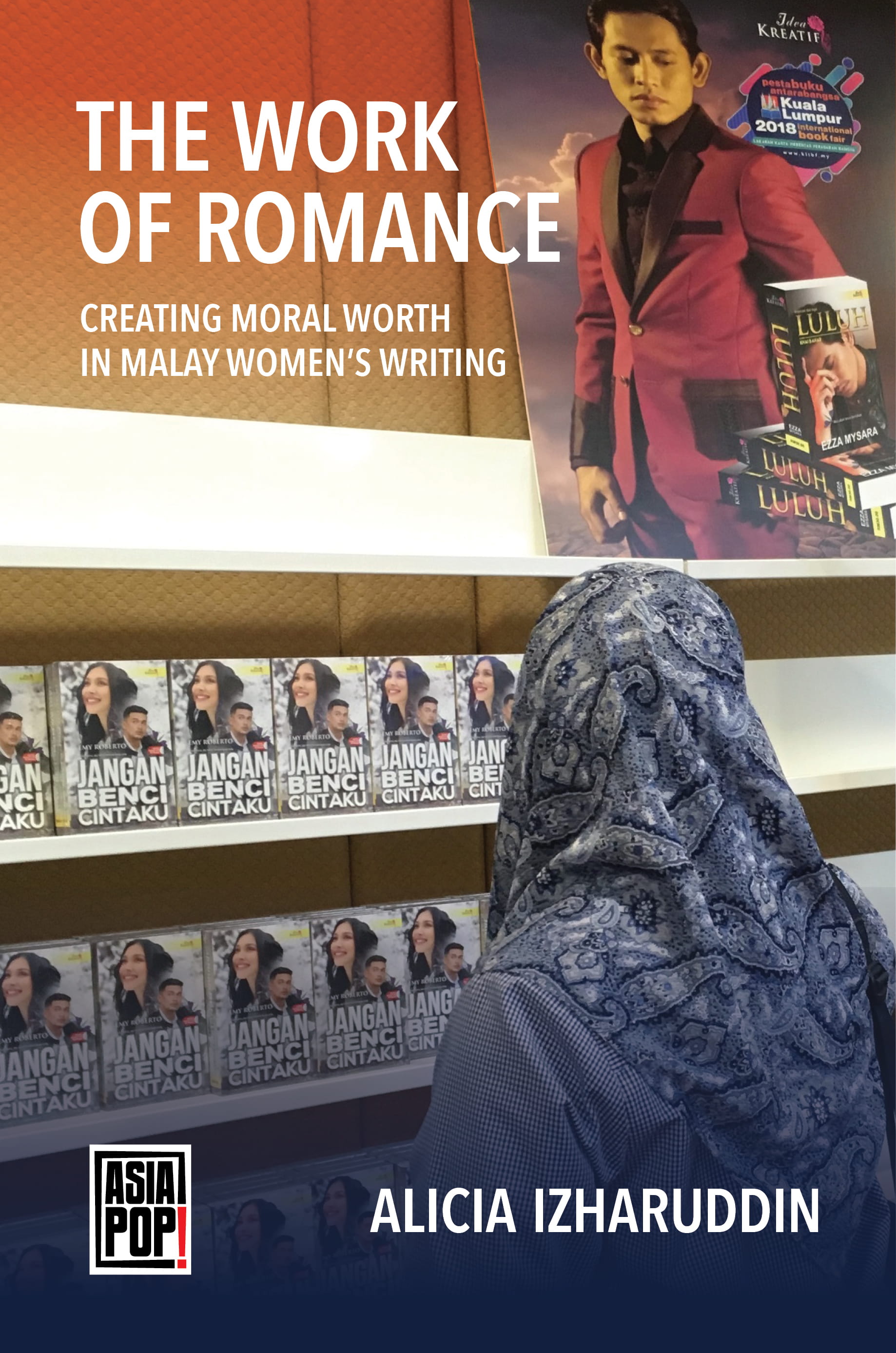
The research behind the book itself began very tentatively sometime around 2016-2017, funded by a small research grant awarded by the Faculty of Arts and Social Sciences at University of Malaya. I was personally compelled by the enduring prevalence of sexual violence and forced marriage themes in Malay popular romance novels and their film and television adaptations; why do women read and write this material? while sexual coercion is a common enough trope in popular romance, why forced marriage? Though it never eschews sex entirely, Malay print romance is qualitatively distinct from western-style popular romance. The former fixates on the often unequal and coerced circumstances that lead to marriage. Unlike western romance that typically ends with marriage, Malay print romance often begins with marriage, from which point heterosexual ‘romance’ and male violence – both intertwined for distressing and melodramatic effect – provide the moral obstacle course for modern Muslim femininity. Covering one hundred years of modern Malay romance since the inception of modern Malay literature, my new book paves a new way of thinking about text and the self as a riposte to Orientalist framings of Muslim life and culture.
Below are some very nice endorsements for the book:
- Original and revelatory. Alicia Izharuddin’s deeply researched ethnography of Malay reading, writing, and publishing is essential for anyone interested in popular romance, contemporary Malaysia, or the locally specific ways that Muslims, especially women, navigate within and make meaning from complex and competing social norms and pressures around gender, sexuality, and family.
—Kecia Ali, author of The Woman Question in Islamic Studies
- The Work of Romance is truly brilliant. Alicia Izharuddin positions Malay romance literature within the social and cultural contexts of increased agency and social mobility for women. She demonstrates how romance writing/reading is much more than leisure: It is work, both in its production and dissemination but also in its application to women’s everyday experiences. While romance can be personally transformative, it nonetheless supplies a moral narrative and emotional structure for accepting and living with gendered inequality. Her book constitutes a significant contribution to the scholarship on romance literature.
—Nancy J. Smith-Hefner, author of Islamizing Intimacies: Youth, Sexuality, and Gender in Contemporary Indonesia
For those in the UK, Europe, Middle East, and Africa, you can pre-order the book from the Mare Nostrum Group’s webpage, with a 30% discount if you use the promo code WOR26.


